1
Select the right stem
Choose a healthy, young, green stem about 3–6 inches long. Look for a stem that has hardened off but has not yet developed woody bark. Avoid shoots carrying flowers or fruit.
A practical, small-scale propagation page for cloning a healthy lemon tree: take a young stem cutting, treat the cut end, plant it in an airy medium, hold humidity high, and wait for roots before potting up.
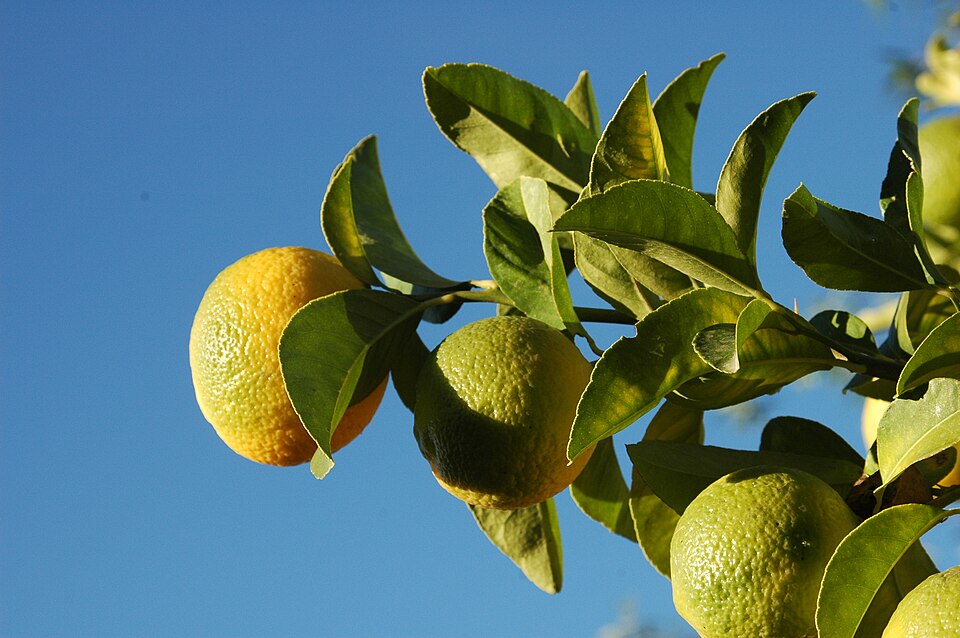
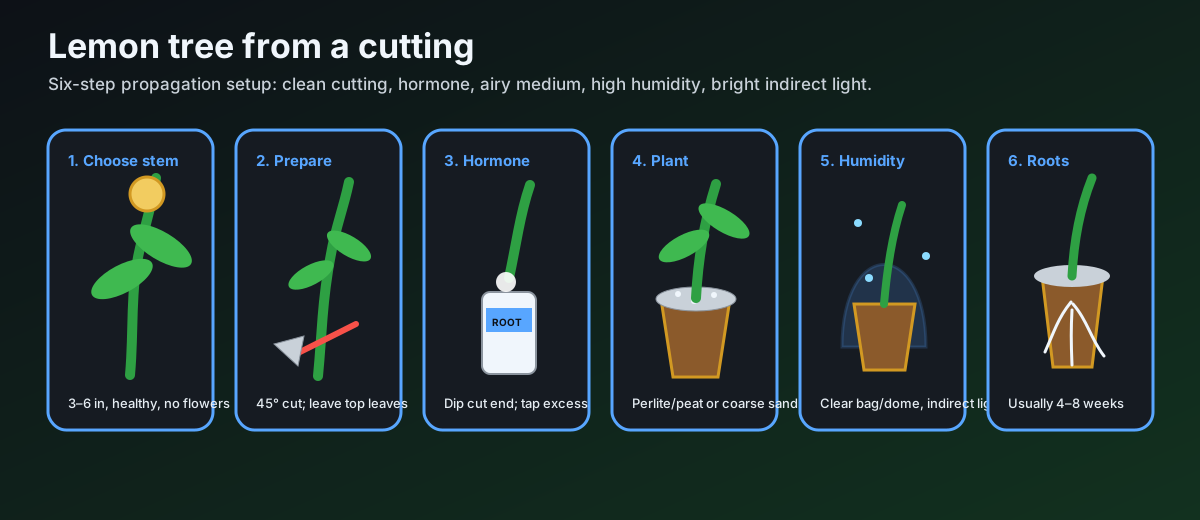
Choose a healthy, young, green stem about 3–6 inches long. Look for a stem that has hardened off but has not yet developed woody bark. Avoid shoots carrying flowers or fruit.
Use clean, sterilized shears. Make a fresh 45° cut at the base. Remove lower leaves and keep only the top two sets; if leaves are large, cut them in half to reduce drying stress.
Dip the fresh cut end in rooting hormone powder or gel, then tap off extra. Citrus can root without hormone, but hormone materially improves the odds and speed.
Use a small pot with drain holes. Pre-moisten a 50/50 peat-or-coir and perlite mix, or coarse sand. Make a hole first so the hormone is not scraped off as you insert the cutting.
Water lightly, then cover with a clear plastic bag, bottle, or humidity dome. Keep it warm in bright indirect light. Vent occasionally so it does not mold or overheat.
Keep the medium evenly moist, not soggy. After 4–8 weeks, tug very gently or inspect drainage holes for roots. Once established, move to a larger pot with citrus/cactus-style well-draining mix.
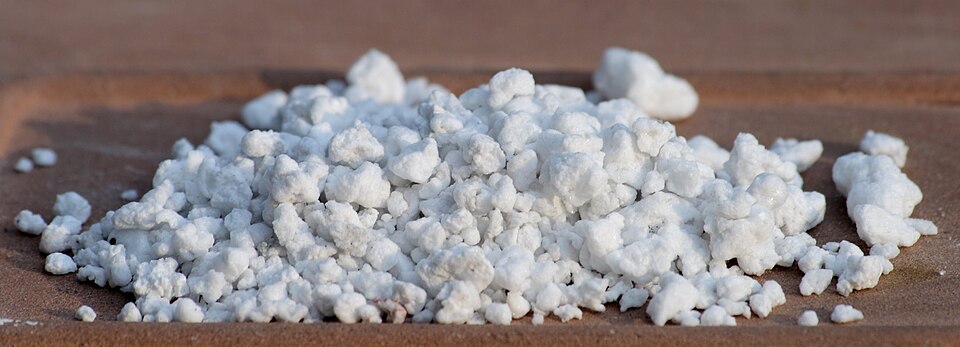
Perlite keeps the rooting medium loose and oxygenated so the new stem base does not rot.
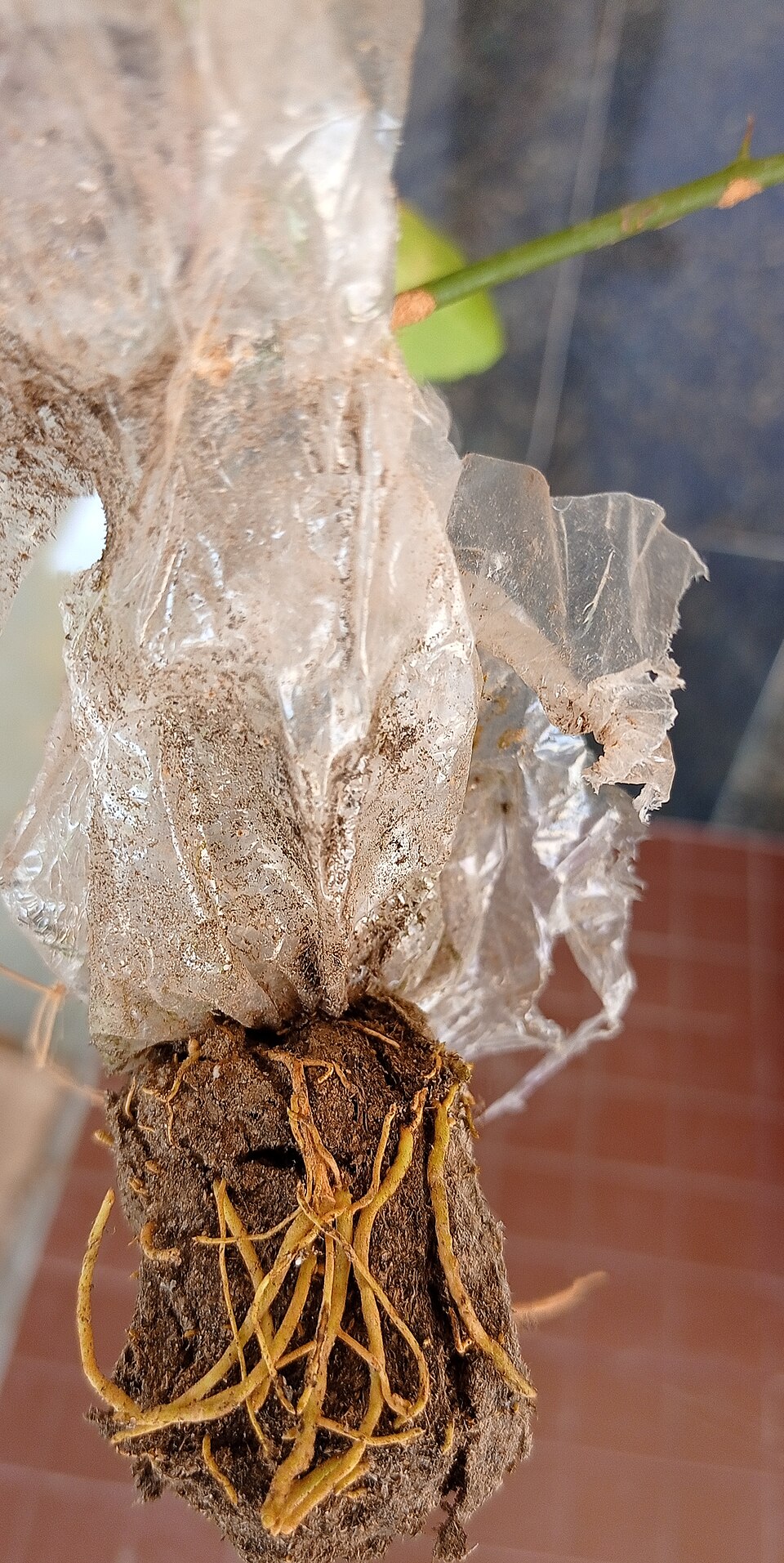
The goal is a fine new root system before potting up. Handle new roots gently; they break easily.
The two biggest helpers are hormone on the basal cut and a clear cover that prevents leaf desiccation.
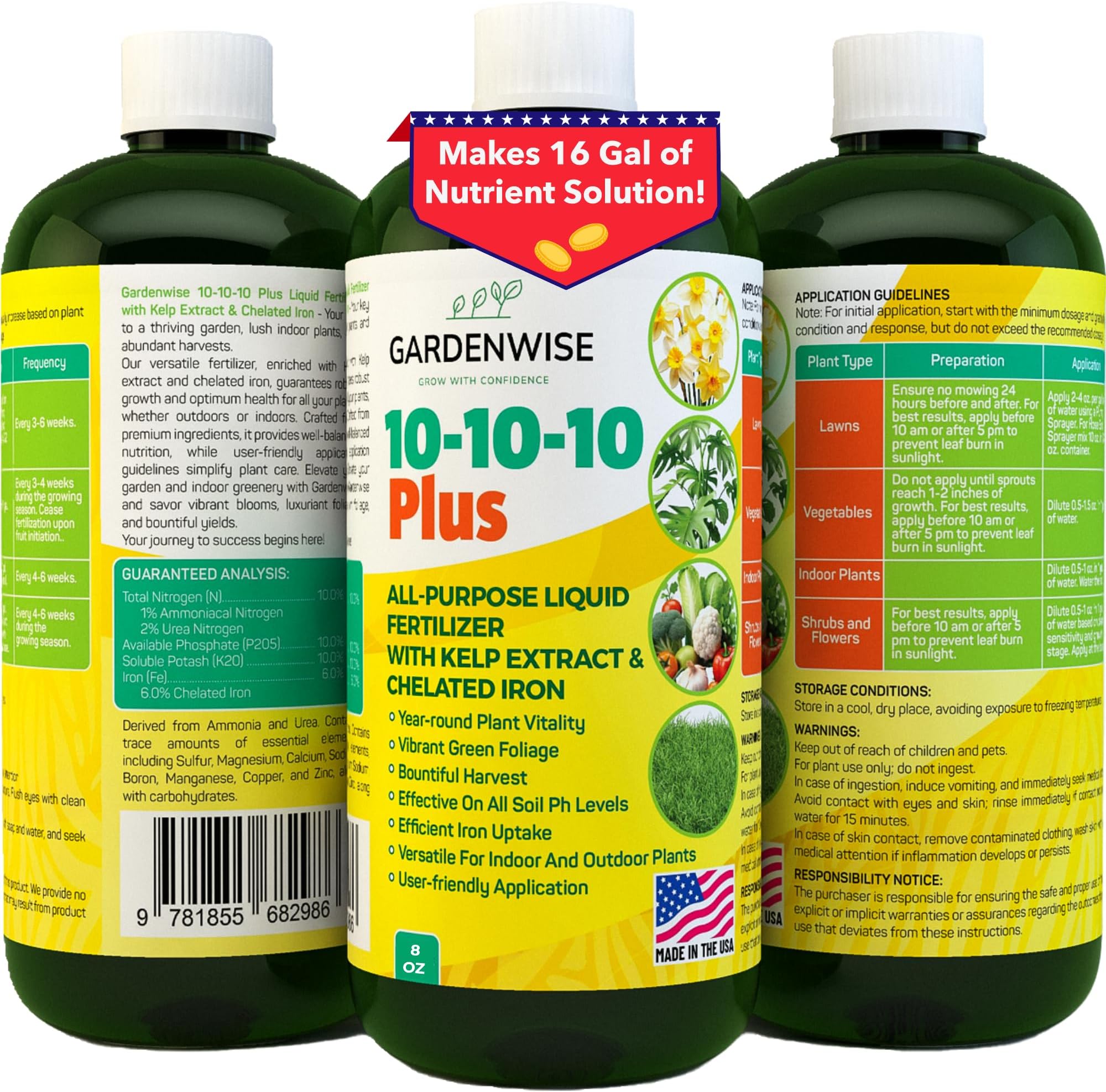
Purchased for the cuttings once their roots are somewhat established. Treat it as a post-rooting / early growth fertilizer, not something to push on fresh unrooted cuttings.
UF/IFAS Citrus Propagation — citrus cuttings, rooting hormone, and high-humidity rooting conditions.
Ask Extension: lemon cuttings — rooting in soil, humidity tenting, well-draining potting mix.
Halleck Horticultural: humidity domes — high humidity and bright, non-intense light for cuttings.
Lemon tree photo: Amada44, Wikimedia Commons, CC BY 3.0. Lemon roots: DEEPAN RAJA .M, Wikimedia Commons, CC BY-SA 4.0. Perlite: Ragesoss, Wikimedia Commons, CC BY-SA 3.0. Method diagram: custom SVG created for this page.